Dog Crate Size Guide for Puppies: First-Time Owner Tips
This guide is for first-time dog owners trying to choose the right crate size for a puppy without buying the wrong setup or spending more than they need to.
Crate size affects comfort, cleanup, and how practical the crate feels in daily life. The goal is not the biggest crate you can fit in the room. It is the crate size that suits your puppy now and still makes sense as they grow.
Recommendations in this guide are research-based unless a product is clearly marked as personally tested.
Quick answer
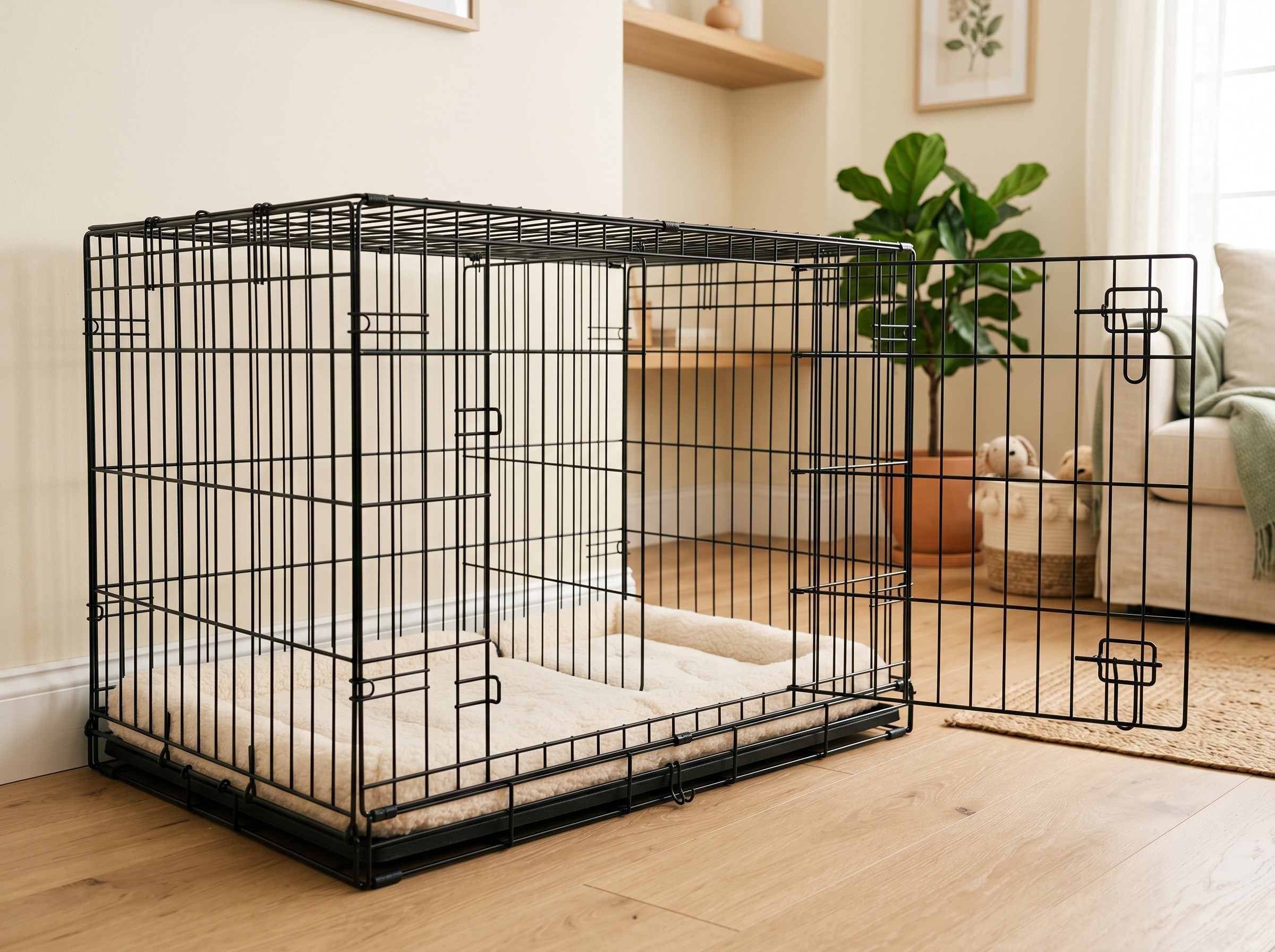
A crate should let your dog stand, turn around, and lie down comfortably. For a puppy, that usually means planning for the adult size and using a divider if the crate would otherwise be much bigger than they need right now.
Start with the basics
Need the full essentials list first?
Use the checklist if you still need the simple version of what to buy before pickup day and what can wait.
Open the puppy checklistFull crate guide
Want crate types and setup help too?
Move into the crates guide if you also need help choosing between a wire crate, playpen, or other setup.
Go to the crates guideWhy crate size matters for first-time puppy owners
Picking crate size is one of the easiest places to waste money early. A crate that is too small will not stay useful for long, while a crate that is much too big can feel like the wrong fit for a very young puppy. The practical middle ground is buying with growth in mind and setting up the space so it still feels manageable now.
Why bigger is not always better for puppies
Bigger sounds safer until the crate becomes much more space than your puppy actually needs at the moment. For many first-time owners, the smarter move is not buying a tiny crate for today. It is buying a crate that can work long term, then adjusting the usable space while your dog is still small.
When to use a divider
A divider is helpful when you buy the crate size you expect your dog to need as an adult. It lets you keep the resting area more proportional during puppyhood without replacing the whole crate a few months later.
How to measure your puppy
- Measure standing height from floor to the top of the head or ears, whichever is higher.
- Measure body length from nose to the base of the tail.
- Compare those numbers with the crate's interior dimensions, not just the product title.
- Use breed expectations only as a rough guide. Measurements are more useful than labels like small or medium.
Common sizing mistakes
- Buying only for the puppy's current size and not thinking about how quickly they may grow.
- Choosing a large crate without a divider when the puppy is still very small.
- Skipping measurements and relying only on generic size labels.
- Forgetting to think about door placement, tray cleanup, and where the crate will sit in the room.
- Buying based on looks alone when a simpler crate may be more practical.